
AI in HR: From Employee Data to Better Decisions
How machine learning and sentiment intelligence convert fragmented payroll and attendance logs into high-retention workforce strategies.
- Traditional HR software acts as a static ledger; AI transforms it into proactive workforce intelligence.
- Early burnout warning models reduce costly turnover before exit interviews occur.
- Algorithmic appraisals eliminate recency bias and subjective scoring discrepancies.
- Ethical guardrails and explainability must be foundational to any automated talent analysis.
1. The Fragmented Data Dilemma in Modern Workplaces
In the vast majority of mid-market and enterprise companies, human resources data is scattered across incompatible silos. Time-tracking sits in biometric fingerprint hardware, leaves reside in email threads, performance reviews languish in PDFs, and payroll is processed in offline spreadsheets.
When leadership asks critical strategic questions — such as which departments face imminent attrition or where operational bottlenecks are draining team energy — HR managers are forced into days of manual spreadsheet synthesis. By the time conclusions are drawn, the data is already obsolete.
Replacing a senior team member costs 1.5x to 2x their annual compensation. Relying on retrospective annual reviews means discovering dissatisfaction months after it was salvageable.
2. Predictive Retention: Identifying Burnout Early
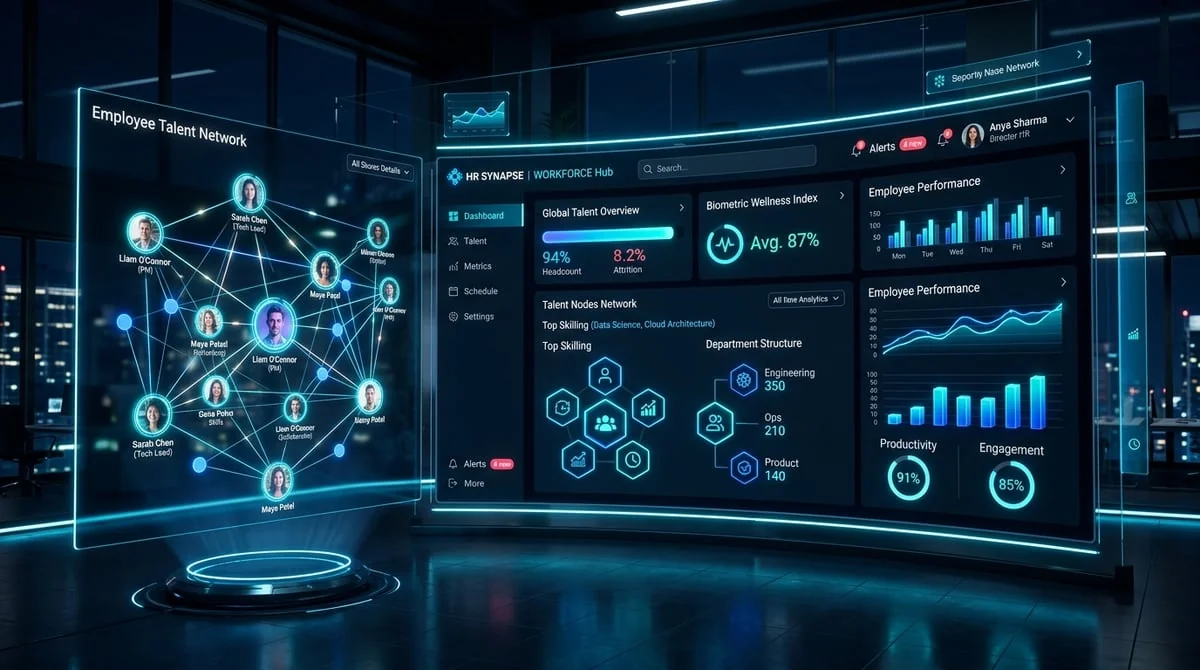
Modern AI-driven HR platforms, such as NADSCA's OHRMS suite, analyze multi-signal operational markers rather than relying solely on subjective self-reported surveys.
By analyzing anonymous aggregate patterns in overtime trends, project sprint velocities, delayed response latencies, and holiday leave accumulation, machine learning models calculate an early 'Workload Stress Index'.
This empowers department leads to reallocate resource allocations and offer proactive support weeks before burnout translates into resignations.
3. Removing Cognitive Bias from Performance Reviews
Human evaluations are inevitably vulnerable to cognitive biases: the recency bias (weighing the last two weeks over the preceding eleven months), halo effects, and personal affinity.
AI models ingest structured KPI milestones, ticket turnaround metrics, and client sentiment reviews across the entire evaluation horizon. This generates an objective baseline trajectory that managers use to conduct constructive, evidence-based development sessions.
Organizations deploying algorithmic performance baselines report a 42% decrease in appraisal disputes and an 18% improvement in internal promotion success rates.
4. Privacy, Compliance, and Responsible Governance
Workplace analytics must never compromise employee trust or confidentiality. Responsible systems deploy local aggregation algorithms, role-based anonymization, and clear audit logging.
At NADSCA, our HR intelligence systems follow strict privacy-by-design standards: no biometric data leaves on-premise encrypted storage, and predictive scores are strictly advisory tools that inform human leaders, never automated termination algorithms.
Discuss this insight with our engineering team
Have questions about applying these patterns or technologies to your operations? We're here to build with you.